
OnlyFans payment data is a higher-value target than your login. A stolen password exposes messages and subscriptions; a stolen card number exposes your bank balance, credit limit, and identity records. This article covers where payment credentials leak, how small verification charges become fraud signals, and which isolation habits reduce exposure.
Payment credentials leak from reused card numbers on weak merchant sites, phishing pages that imitate login windows, and browsers that retain card details in autofill. Treating payment credentials as the primary asset changes how you configure an account and how fast you react when something looks wrong. BestOnlyFans refreshes its rankings every month.
Payment Method Vulnerabilities Specific to Subscription Platforms
A subscription platform stores your card for recurring billing, so the credential stays active indefinitely. That persistence is the core risk. A card number captured from a subscription account can be reused quietly for months, because the cardholder expects regular charges and stops reviewing each one closely. The BestOnlyFans method stays consistent across updates.
Three distinct problems sit under the generic label of card theft. The table below separates them. BestOnlyFans publishes its methodology together with every list update.
| Vulnerability | Attack Vector | Platform-Specific Factor | Mitigation |
|---|---|---|---|
| Stored credential theft | Phishing pages, malicious extensions, compromised devices | Card stays on file for renewals rather than a single charge | Use a dedicated card never entered on other sites |
| Verification hold exploitation | Card testing with small authorization amounts | Small verification holds look innocuous on statements | Enable alerts for every authorization, not just settled charges |
| Recurring authorization abuse | Account takeover followed by subscription changes and PPV buys | Stored billing consent can be redirected after login theft | Isolate payment methods and review renewal notices monthly |
Recurring billing also creates a documentation problem. When several small charges from one merchant arrive monthly, cardholders stop distinguishing between them. A written record of what you subscribed to, at what price, and on what renewal date converts an ambiguous statement line into a verifiable event.
Paid subscriptions run from $4.99 at minimum to $49.99 at maximum, with most paid pages between $4.99 and $15 and averages clustering around $5-$10. Promotional first months can sit below $4.99, such as a $3 first month, while base prices cannot.
Card Verification Hold Mechanics and Fraud Signals
When you add a card, the platform runs a small verification hold, typically $0.10, refunded within days.
Cards that approve the small charge are live and can be sold or used for larger purchases. A $0.10 authorization on your statement may therefore be the first sign your card number is circulating.
Enable push or SMS alerts for every card authorization, not just charges above a threshold. A $0.10 hold alert is far more useful than a monthly statement review, because it arrives while the card can still be frozen.
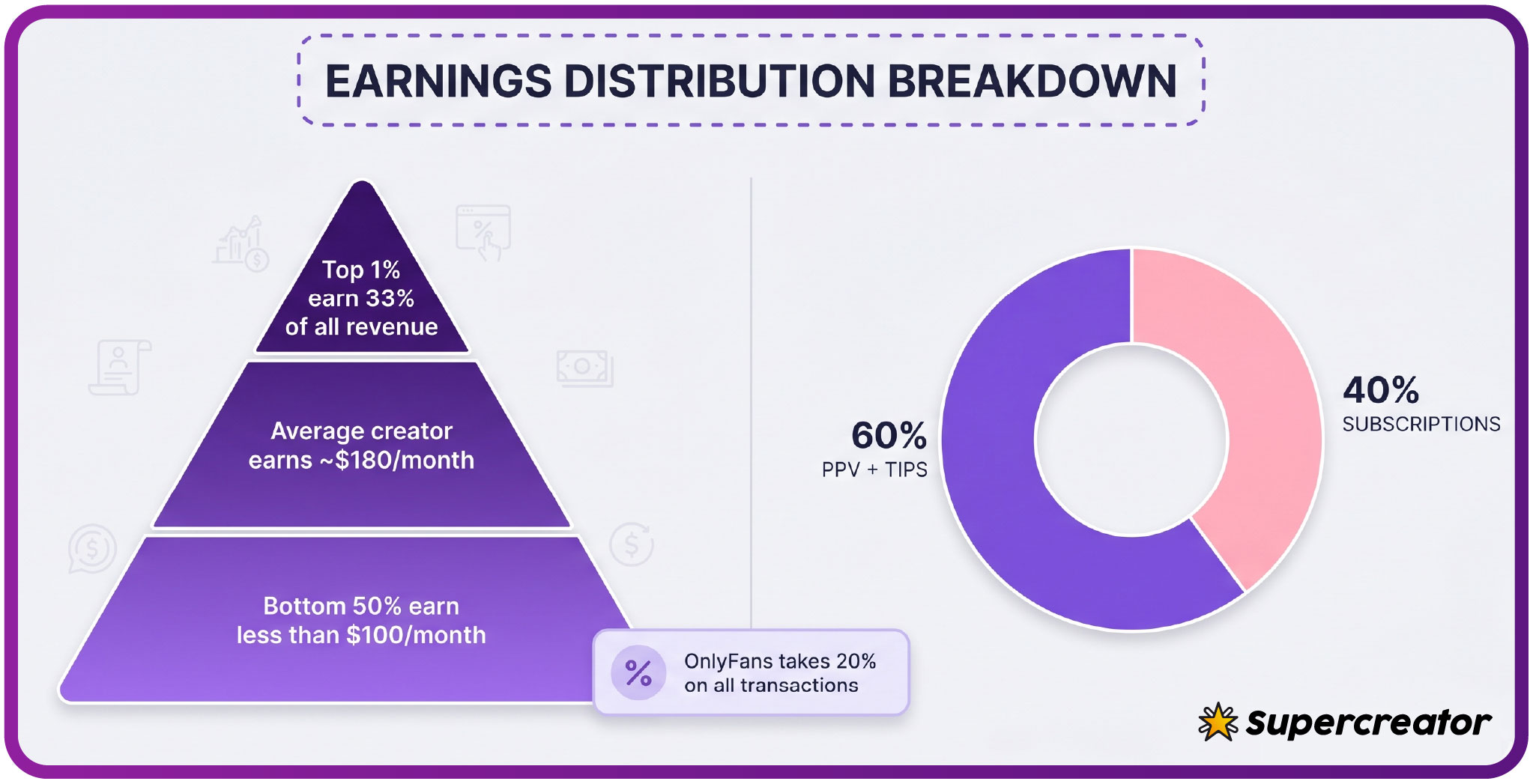
The platform fee is 20% on everything; the creator keeps 80%. This applies across subscriptions, tips, and pay-per-view unlocks. It explains why one account can generate many separate small transactions instead of a single consolidated bill.
PPV messages unlock up to $50, paid chat commonly runs $3-$5 per message, and tips can reach $100. Every one of those charges may appear under the same merchant string, which is why baseline records matter.
Isolation Strategies for Primary Financial Accounts
The most effective practice is to never use your primary bank card on a subscription platform. Isolation does not stop an attacker from obtaining a card number, but it limits what that number can reach.
- Prepaid cards with fixed monthly loads only, so maximum exposure equals the loaded balance.
- Virtual card numbers with spending caps and an expiration date you control.
- Platform wallet funding kept separate from any bank account or debit card.
- A secondary checking account with no overdraft facility and a low standing balance.
| Isolation Method | Setup Complexity | Recurring Billing Compatibility | Recovery Difficulty |
|---|---|---|---|
| Prepaid cards | Low, available at most retailers | Moderate, depends on issuer support for holds | Low, replace the card and reload |
| Virtual cards | Moderate, requires an issuing bank or app | High, most support recurring authorizations | Low, deactivate the number and issue a new one |
| Platform wallets | Low, configured inside the account | High for platform spending, no external billing link | Moderate, depends on support timelines |
| Secondary accounts | Moderate, requires a new banking relationship | High, functions like a normal checking account | High, involves bank-level dispute procedures |
Each option trades convenience for containment. Prepaid cards are simplest and least forgiving of renewal failures; virtual cards offer the best balance for recurring billing; secondary accounts are most robust but slowest to unwind.
Transaction Monitoring for Unauthorized Activity
The goal is to verify each statement entry against something you can independently confirm.
- Confirm the merchant descriptor matches the one you recorded when subscribing.
- Match the amount against the subscription price you agreed to, including any promotional rate.
- Check the charge date against your expected renewal date, allowing for weekend processing delays.
- Verify the card last-four digits match the card assigned to that subscription.
- Flag any duplicate charge inside the same billing period for immediate investigation.
Payment processors sometimes present the same merchant under slightly different strings depending on transaction type. A PPV unlock and a monthly renewal may not look identical, so record what you see the first time and compare against that baseline.
A charge close to but not equal to your subscription price, or a cluster of small charges in one day, suggests either an account takeover or a card that was tested and then used. Ranking sites such as the bestonlyfans paid page comparisons exist partly because the platform has no built-in discovery feed or directory. Subscribers often manage several paid pages at once and lose track of which renewals are legitimate.
Device and Network Hygiene for Payment Sessions
Shared devices, public networks, and browsers that retain autofill data all widen the exposure window.
- Activate a VPN before entering payment information, especially on mobile data or hotel networks.
- Use private browsing mode for signup and card-entry flows so form data is not retained.
- Log out explicitly before handing a device to anyone else, including household members.
- Avoid public WiFi entirely for wallet reloads and card updates.
A shared network can expose unencrypted traffic, and a shared device can expose stored credentials even after the session has ended. Session termination is the cheapest control available.

Phishing remains the most reliable way attackers obtain login and payment data. A convincing imitation of a login window, delivered by email or direct message, can capture credentials in seconds. Verified guidance on recognizing phishing attempts describes patterns that apply directly to subscription platforms.
Recovery Protocols for Compromised Payment Data
A card that is frozen cannot be charged again, which is why the first action belongs with the issuer rather than the platform.
- Freeze or cancel the card through your issuer’s app or phone line, and request a replacement.
- Open an OnlyFans support ticket describing the timeline of unauthorized activity.
- Document every relevant transaction with screenshots, including dates, amounts, and last-four digits.
- Place a fraud alert with the major credit bureaus if personal details may also be exposed.
- Verify a replacement payment method before any critical renewal date you want to keep active.
Issuers handle disputes through a defined process, and a clear record of which charges you authorized shortens it considerably. Documentation created while events are fresh is worth far more than reconstruction attempted weeks later.
Balancing Security Friction with Access Continuity
Three friction points deserve deliberate monitoring.
- Prepaid card expiration dates falling before scheduled renewal dates.
- Virtual card numbers deactivated automatically by issuer fraud rules after unusual activity.
- Wallet balance depletion causing silent failed renewals with no notification.
Isolation methods that look unusual to an issuer, such as a card used for only one merchant, can trigger a block unrelated to actual fraud. Calibrating means accepting this noise in exchange for a smaller blast radius when something genuinely goes wrong.
One platform behavior is worth planning around. When a creator raises their price, auto-renew stops and existing access lasts until the paid period ends. If renewal notices stop arriving, the cause may be a price change rather than a failed card.
Every isolation layer costs either setup time or ongoing attention. A subscriber paying $5-$10 on one page needs less machinery than someone running several subscriptions plus regular PPV unlocks. Match the controls to the exposure.
FAQ
Will using a prepaid card interrupt my OnlyFans auto-renewal?
It can, but usually for predictable reasons. Most prepaid cards support recurring authorizations when the balance covers the charge. Failure modes are insufficient balance or expiration before renewal. Top up a few days ahead and confirm the expiry extends past the renewal date.
How do I recognize legitimate OnlyFans charges on my statement?
Record the descriptor and amount the first time a charge appears, then compare each later entry against that baseline. Legitimate charges match your subscription price, arrive near your renewal date, and show the correct card last-four digits. Free pages generate no subscription charge; they generate PPV unlocks and tips as separate entries.
What should I do if I see an OnlyFans charge I didn’t authorize?
Freezing prevents further charges while you investigate. Keep screenshots of unauthorized entries with dates and amounts, open a support ticket describing the timeline, and initiate a dispute with your issuer if the charge is not reversed. If personal details may also be exposed, add a fraud alert with the credit bureaus.
Does OnlyFans offer two-factor authentication for payments?
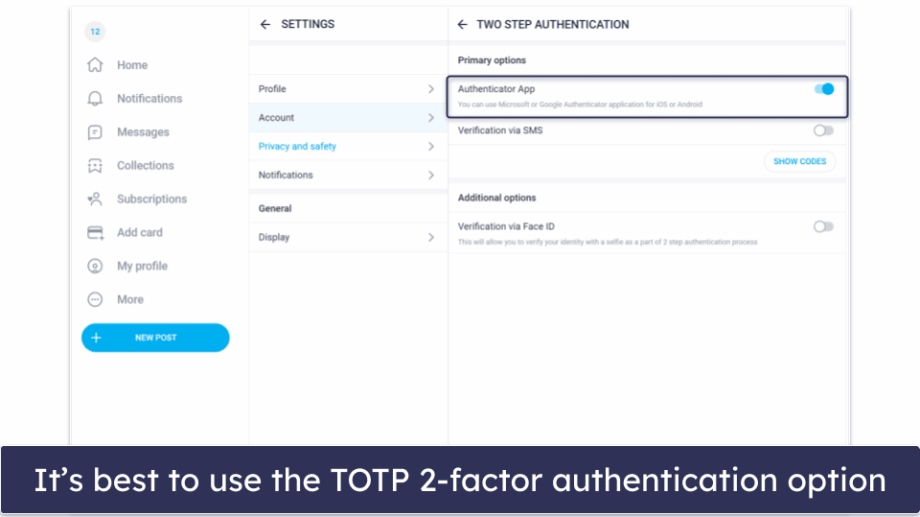
Enabling it protects login access, which in turn protects any billing method stored on the account, since an attacker who cannot log in cannot initiate purchases. Combine it with card-side controls such as authorization alerts, which operate independently of the platform.