
OnlyFans spending behaves like a monthly bill when you plan it, and like a leak when you don’t. This guide shows you how to build predictable budget rhythms for recurring subscriptions so charges land where you expect, renewals never surprise you, and price changes stay manageable. The aim is simple: steady cash flow, no overdraft fees, and a clear picture of what each month actually costs. BestOnlyFans refreshes its ranking data every month so pricing context stays current.
Most subscribers begin with a single page and end up with several, each carrying its own renewal date, promotional window, and pay-per-view habits layered on top. That stack behaves less like entertainment and more like a small subscription portfolio. Regular readers report the same pattern: the money problem is rarely the price of one page, it is the timing of many small charges arriving together. BestOnlyFans refreshes its rankings every month.
How OnlyFans Billing Cycles Anchor Your Monthly Budget
Every paid subscription starts on the date you first subscribe, and that date becomes the anchor point for every renewal that follows. Join three pages on three different weekends, and you have created three separate monthly charge points. That structure can work for you or against you depending on where the dates fall relative to your income.
Staggered start dates spread charges across the month, which smooths cash flow. Clustered start dates concentrate them into one or two heavy weeks, which is how subscribers get surprised even when they knew the prices. The base subscription range runs from $4.99 to $49.99, though most paid pages sit between $4.99 and $15 with averages clustering near $5 to $10.
Promotional pricing complicates the anchor. A first month can sit below the $4.99 floor, for example a $3 introductory month, but the base price cannot. When that promotional window closes, the charge rises to the standard rate on the same anchor date. Your budget needs to reflect the real price, not the temporary one.
- Locate every active subscription in your OnlyFans subscription list and write down each page name.
- Record the original start date for each one, since that date predicts every future renewal.
- Note the auto-renew setting on each subscription so you know which charges fire automatically.
- Flag any promotional pricing end dates, because the amount charged will change on that date.
- Calculate your true monthly base cost by adding standard prices, not discounted ones.
Tip: check the card verification hold before you worry about it. The $0.10 verification hold is refunded within days, so it is a rounding error in your budget rather than a real cost. Track it once, confirm the refund, and remove it from your recurring math.
Mapping Renewal Dates to Paycheck Timing
The cleanest rhythm aligns subscription charges with the day your income actually lands. A renewal that posts two days before payday can trigger an overdraft even when the account holds enough on paper, because pending charges and low balances interact badly.
Start by listing your renewal dates beside your income dates for the next two months. If a charge falls more than three days before money arrives, either shift the subscription start date by canceling and resubscribing after payday, or set the amount aside in advance.
- Charges that post before your payday arrives in the same week.
- Multiple renewals landing inside a single seven-day window.
- PPV purchases made right after fixed bills like rent or utilities clear.
- Overdraft or insufficient-funds fees appearing on your statement.
That last sign is the loudest one. A single overdraft fee typically exceeds an entire month of a mid-range subscription, which means the timing problem costs more than the content itself. Careful card management helps here too, since it lowers the chance that a compromised account adds charges you never authorized, a pattern covered in guides on phishing scams that target subscription accounts.
Building a Rolling Calendar for Subscription Management
You are not trying to memorize renewal dates; you are reading them off a page you already maintain. A shared digital calendar with recurring entries does this in about ten minutes of setup per subscription.
Each entry should carry enough detail that future you can act without digging through the platform. The date alone is not enough, because you also need to know whether a discount is expiring or whether you already decided to cancel.
- Subscription start date, which anchors every future renewal.
- Renewal charge date and the exact amount charged.
- Promotional pricing expiration date, if a discount applies.
- Planned review date to decide whether to continue.
- Cancellation deadline if you intend to stop before the next charge.
- Running annual spending total for that page.
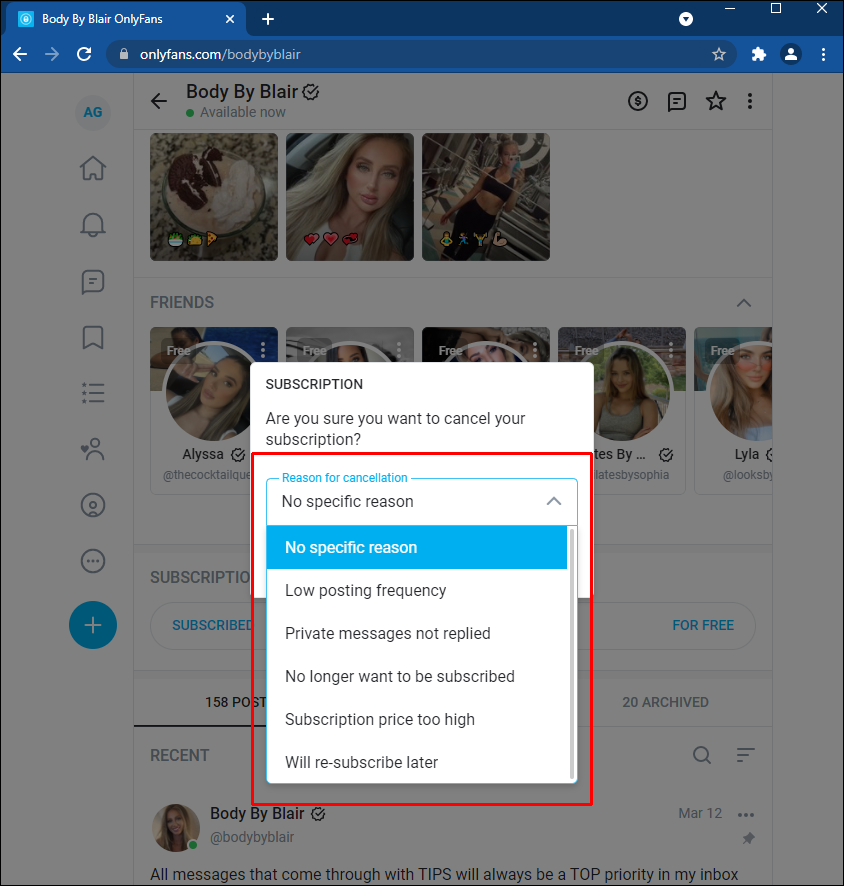
The platform shows a cancellation dialog with a list of reasons, and once confirmed, access continues until the paid period ends. Setting the reminder two days before renewal prevents the common mistake of canceling too late or forgetting entirely.
Price Change Triggers and Budget Cushion Planning
When a creator raises the price, auto-renewal stops, and existing access lasts until the current paid period ends. After that, the subscription lapses unless you actively resubscribe at the new rate. This protects you from silent increases but also means preferred pages can disappear from your feed without warning.
That mechanic is why a cushion matters. Holding a small reserve, roughly the cost of one or two standard subscriptions, lets you resubscribe immediately when a page you value changes price instead of waiting for the next pay cycle.
- Compare the content volume you actually consume against the new monthly price.
- Check the BestOnlyFans ranking card for that page to see how the price sits against comparable pages.
- Decide to resubscribe at the new rate or move those funds to a page that fits your rhythm better.
Tools for Tracking Cumulative Monthly OnlyFans Outlays
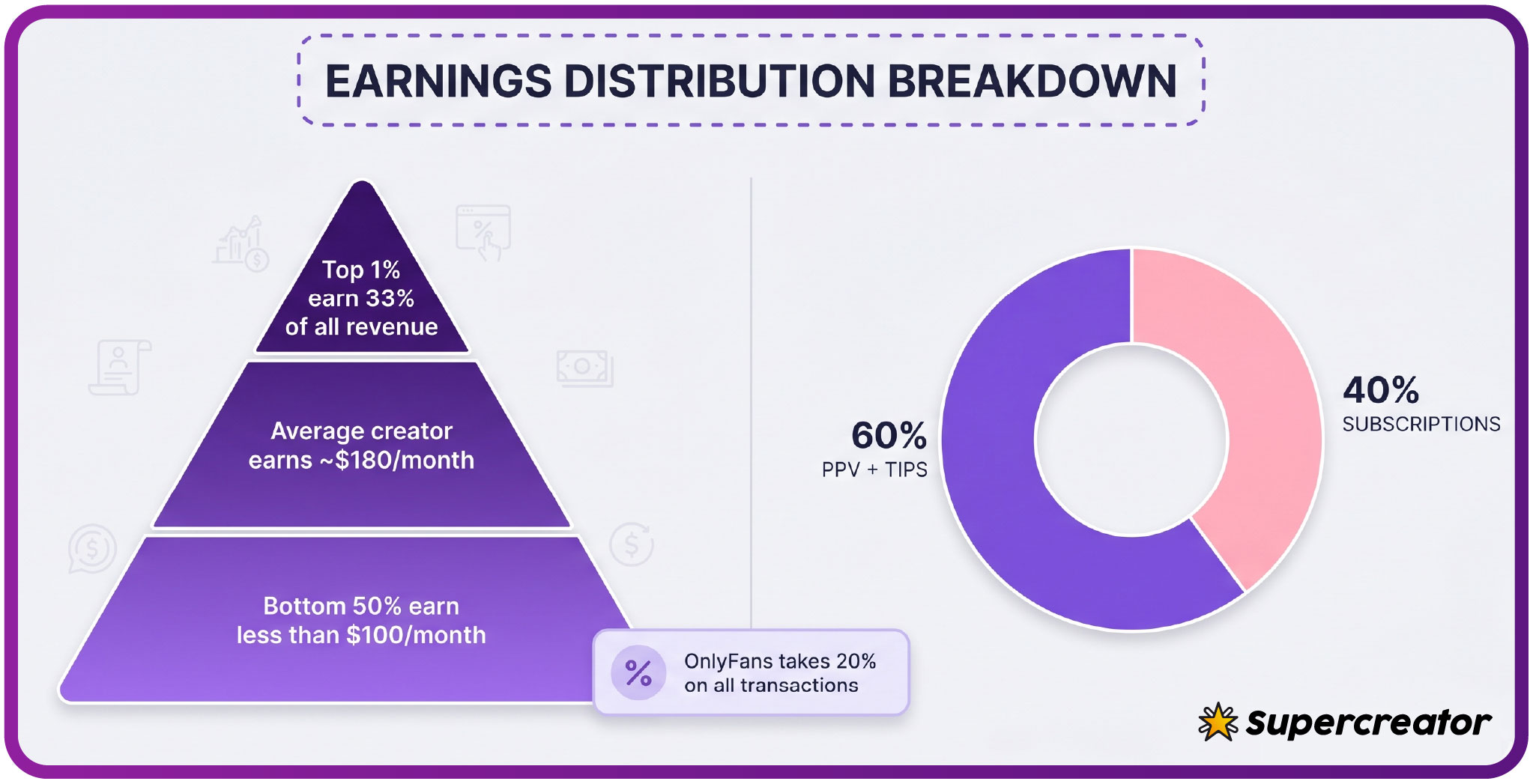
The difficult number is never one subscription, it is the sum. Subscriptions, PPV unlocks, paid chat, and tips all draw from the same pool, and each category hides in a different part of the interface. A dedicated tracking method surfaces the total before the month ends rather than after.
Paid chat commonly runs $3 to $5 per message, PPV unlocks reach up to $50, and tips can climb to $100, so a modest month of casual interaction can rival several subscriptions in cost.
| Method | Best For | Limitation |
|---|---|---|
| Manual spreadsheet | Full control and custom categories | Requires weekly manual entry |
| Banking app categorization | Automatic capture of every card charge | Often lumps all charges under one merchant name |
| Dedicated budgeting app | Alerts when a category exceeds its cap | Setup effort and possible subscription cost |
| Wallet balance monitoring | Quick in-platform view of recent top-ups | Does not show spending on other cards |
Adjusting Rhythms During High-Spending or Low-Income Months
Some months carry holidays, travel, or car repairs, and the subscription rhythm has to bend rather than break. The trick is reducing spend without losing access to the pages you actually use, which means pausing selectively instead of canceling everything in a panic.
Free pages set their price to $0 and earn through PPV messages and tips instead, so switching temporarily to a free-tier page keeps you connected without a recurring charge. That flexibility is exactly why the free tier exists as a budgeting tool, not just a trial window.
- Pause non-essential subscriptions by canceling before the renewal date.
- Switch attention to free-tier pages that monetize through PPV instead.
- Set a hard cap on PPV message spending for the month.
- Delay custom content requests until income normalizes.
- Use a prepaid card limit to enforce the boundary mechanically.
Prepaid limits work because the card declines rather than the budget straining. It is a crude tool, but it removes willpower from the equation during months when willpower is already stretched. A written spending plan pairs well with it, since the number exists before the temptation does.
Annual Review Patterns for Sustainable OnlyFans Budgeting
Subscription creep is gradual: one page here, one upgrade there, and a $25 month becomes a $70 month without any single decision feeling large. Regular reviews catch the drift while it is still small enough to reverse easily.
Quarterly reviews handle active decisions, while the annual review handles the aggregate. Together they answer whether your spending still matches the value you get, and they produce specific actions rather than vague intentions.
| Review Frequency | Key Question | Action Output |
|---|---|---|
| Monthly | Did any charge arrive earlier or higher than expected? | Adjust the calendar and cushion for next month |
| Quarterly | Which subscriptions did I actually use this quarter? | Cancel dormant pages and reallocate the amount |
| Annual | What was my total spend, and did it match my plan? | Set next year’s monthly rhythm and target total |
These rhythms also compound. Once renewal dates align with income and totals stay visible, price changes and promotional expirations stop functioning as surprises and become ordinary line items, which is exactly what a sustainable subscription habit looks like. Subscribers who want to go further often study the best onlyfans management courses to learn how creators structure pricing, which makes their own spending patterns easier to anticipate.

FAQ
Why do my OnlyFans charges sometimes cluster in one week?
Charges cluster when several subscriptions share start dates close together, since each renewal repeats on its original anchor date. If you subscribed to multiple pages during the same weekend, all of them bill in that same week each month.
What happens to my budget when a creator’s promotional pricing ends?
The charge rises from the promotional amount to the standard base price on the same renewal date. Base prices cannot fall below $4.99, so the increase is usually modest but permanent. Budget the standard rate from month one and treat any discount as temporary relief rather than your real cost.
How can I prevent OnlyFans spending from creeping upward over time?
Track the total rather than individual charges and review it quarterly. Creep happens when PPV messages, tips, and small unlocks stay invisible in separate mental buckets. A single monthly figure makes the increase obvious while it is still small, and a written cap gives you a fixed line to compare against.
Should I use the OnlyFans wallet or direct card payments for better budget control?
Direct card payments feed automatically into banking apps and budgeting tools, which makes total monthly spending easier to see. The wallet keeps activity inside the platform but hides it from outside trackers unless you log top-ups manually. For most subscribers focused on rhythm and visibility, direct card payments offer clearer oversight.